Labels

Showing posts with label Professional Development. Show all posts

Friday, October 2, 2015

Personalized Learning: part 2

Personalized Learning: From "Trending" to "It's just the way we do it"  Part 2


     At the end of last 2014-15 school year, I was gearing up for staff professional development for this 2015-16 school year. Our goal with pd this year, our challenge, is to bring all staff closer to providing personalized learning experiences to our students. This is a lengthy process and it involves changing the roles of teachers as they go through the stages from teacher centered to learner centered. (refer to Bray and McClaskey "Making Learning Personal)
     
    Last year we had one team of teachers combine their kinders and their 1st graders (K/1 Fusion) and were very successful in making inroads to personalized learning. We connected with other schools that were on a similar journey and exchanged valuable ideas and resources. Their experiences as teachers have been exciting and our parents and students have noticed the difference. (read one of the teacher's most recent classroom experiences here)  I hope to capture more of these comments and experiences by setting up a "parent interview booth" at our October parent-teacher conference nights. (thanks to @galvin1821 Principal Shawn Galvin, Lincoln Elementary in Jaynesville, Wi. for the resources and idea!)

      Over the summer, I purchased books for the teachers, set up a Google Classroom and began assigning tasks for the teachers to complete. Some assignments had them reading blogs from other schools that are on a similar journey and leaving comments. Other assignments were chapter book talks, making Codes of Cooperation and sharing of them, 60 second elevator speeches convincing others of why this is a great way to learn, as well as exploring PLPs, Backpacks, and the Seesaw app. Sometimes they do these assignments from home, and sometimes we meet face to face and have a working morning where they choose what they work on and whether they work alone or in a group. I think this is the kind of pd opportunities teachers appreciate. We will continue this manner of pd for the remainder of the year, and I have told staff this is at least a 3 year process. I read recently a blog from @mclane_ryan that outlines their school district's vision of personalize learning with reaching the goal by 2020. I may be a little ambitious with a 3 year goal for our building, but I agree that 5 years for an entire district is probably very realistic.

    What we were doing five years ago is different than what we are doing today. Five years from now, I hope I can say the same thing.


Friday, May 22, 2015

Personalized Learning: From "Trending" to "It's just the way we do it"


 A Google search defines:
Trend: a general direction in which something is developing or changing.  
synonyms:tendencymovementdriftswingshiftcoursecurrentdirection,progressioninclinationleaning

I first read the article 10 Trends to Personalize Learning in 2015 around Christmas time 2014. I reread it again just recently and joined in on a webinar about the article with a couple of my teachers. It prompted me to think about these things...

      At what point does a trend become sustained long enough for people to stop calling it a trend, or a movement, or an initiative, or a pilot? When does it become our culture, or our method, or our strategy, or our "it's just the way we do it" kind of thing?

    The journey from vaguely being aware of what personalized learning is or isn't, to how to actually make it come alive in a classroom setting or school is a mysterious one. You wouldn't think it would be such a daunting thing since the entire "accomplished" side of the current teacher evaluation system in Ohio is heavily laden with adjectives such as "individualized" and "personalized." And since there looks to be many teachers earning the accomplished ratings, you would think that we would see many classrooms engaged in personalized learning environments. We would see PLPs (personalized learning plans), assessments "as" learning along with "for" and "of" learning assessments. We would see students involved in goal setting and peer feedback. We would see more multiage classrooms or small group settings because don't we all agree that time is the variable, not the learning? We would see teacher teams co-teaching and forming skill groups based on collective data. We would see teachers building student relationships over multiple years. We would see students and parents excited about schools. We would see more emphasis on learning, less on "grades."

 According to this comparison, many of our teachers continue to do business in a traditional classroom.

 You can decide for yourself which stage your teachers are in by considering the following:


    We are a long way from where we think we would like to eventually be and we will need to spend time with the Belief Systems stage. I do think that if we reach out to the schools, teachers, and organizations that have similar experiences and expertise, that we can begin to make inroads to changing what is currently a "predicted trend" to "our way of doing business."

If you would like to join us on our journey you can connect with us here:
https://www.facebook.com/pages/Conesville-Elementary-School/1509649609266231?_rdr
https://www.facebook.com/conesvillek1fusion?ref=hl
@RVCprincipal on Twitter

For sites of interest on this topic:
http://www.personalizelearning.com/p/home.html
http://personalmasteryandtechnology.weebly.com/
http://www.ccsdschools.com/StrategyPlanningPartnerships/OrganizationalAdvancement/Grants/RTT/RTTDStrategicPartners.php
http://kinderstem-plp.blogspot.com/search/label/Personalized%20Learning
#plearnchat on Twitter


Saturday, February 28, 2015

#PD Your Own Way by guest blogger Jamie Wright

#PDyourownway


I work at Conesville Elementary as a K-2 Intervention Specialist.  This year, my kindergarten and first grade co-teachers and I launched a K/1 Fusion.  This K/1 Fusion has brought a lot of new and awesome things.  If you haven’t heard about our K/1 Fusion, learn more about it here!  Along with teaching in the K/1 Fusion, I also co-teach 2nd grade math.  


These new and awesome things happening in the K/1 Fusion have taken careful planning, outside the box thinking, and many hours creating.  A lot has happened from last spring when my kindergarten co-teacher, Michelle, thought of this crazy idea until now.  We aligned schedules, moved physical locations of classrooms, rostered classes, created unique schedules, created pre-assessments, formatives, and summatives, made new games, implemented new strategies and teaching methods, integrated technology, and created personalized learning opportunities for students.  


Although my team and I are relatively creative people, we did not get here on our own, nor can we continue our journey on our own.  As teachers, we are constantly looking for ways to better our instruction, methods, strategies, interventions, enrichments, etc.  With our crazy hectic work days and busy nights fulfilling committee and coaching obligations, when does one find time to squeeze professional development in?


In years past, if teachers wanted professional development (PD), it meant losing a day in your classroom to attend a training or PD session of some sort.  Today, teachers can get quality PD from the comfort of their own couch! Wait...how can that be?


Twitter, Pinterest, Blogs, and other social media outlets have allowed for this.  Hold on…How could one POSSIBLY learn anything from a silly social media site? I am here to tell you that some of my BEST PD has come from Twitter, Pinterest, and Blogs.  I use these 3 social media outlets to gain ridiculous amounts of knowledge, find new interventions, and new ways to teach different standards.


I do have a small confession, though. At first...I was skeptical, like many.  When my principal mentioned Twitter, I was like, “Oh, there is no way I will EVER use Twitter. It’s dumb and I don’t understand it.”  My principal INSISTED that I create an account and check it out.  I was very slow moving in this process because I didn’t really see the value in it.  I had my Twitter account for about a year and a half before I really used it.  One day at school, he told me about something called a TweetChat.  He told me that I should log on and use the hashtag, #oacteach and follow the conversations that were happening.  His explanation of this event sparked my interest.  I decided to check it out.  The first time I connected, I was a bit mindblown.  It was crazy how many people were participating in this chat, discussing a common topic, sharing ideas, and collaborating at the same time from a variety of states.  I had to learn more! I started researching other hashtags and found that the opportunities for professional development via Twitter were endless.  Shortly, I was hooked.  Once again, my principal was correct!    


According to a research paper from Pearson, “social media lend themselves naturally to cross-school collaboration and good practice sharing, both in terms of ease and cost-effectiveness.  This is true in so many ways.  Simply logging onto a TweetChat allows me to connect with multiple other educators from the comfort of my own couch.  I am able to engage in meaningful and powerful conversations with educators across the country who I may never meet in person.  The research paper from Pearson also states, “The global nature of Twitter allows teachers to engage with a more diverse group, challenging their own perspectives and inspiring new ways of thinking.”  Browsing through Pinterest links me to thousands of new ideas and connects me to other educators.  By reading blogs, I am able to understand other educators’ views on topics and ask questions or share my ideas on the topic.  I have learned more during an hour TweetChat on Twitter than I have in some college courses I have taken.  It is simply amazing to me that I am able to sit down (in my own house) and connect with so many diverse people with different experiences who are willing to share their ideas.  This type of collaboration allows for me to grow as a teacher.  My ideas and ways of thinking are sometimes challenged.  Most times I am inspired.    

Although I use many social media outlets to gain information, today I am going to focus on Twitter.  I use Twitter the most, usually daily.  For those of you who are still skeptics, I would like to share with you how to go about getting involved in Twitter.  I hope to show you the value in it, so you can learn as much as I have.  
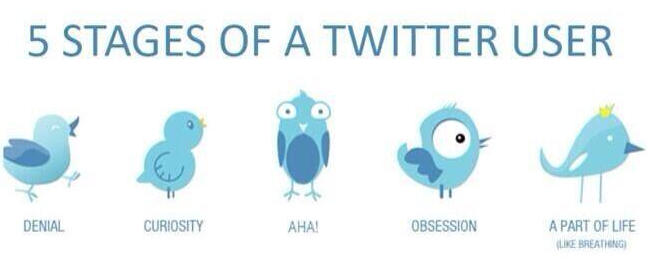
Hopefully, by this point, you have already passed through the Denial Stage of Twitter and I have piqued your interest.  You are now in the Curiosity Stage.  At this point, you should navigate to twitter.com and create yourself an account.  Don’t worry...it’s easy and FREE!  Once you’ve created an account, you’re ready to explore!

If you already know some people on Twitter, search for them and begin following them.  As you use Twitter more, you will start to find your “herd” of people to follow.  If you’re unsure of who to follow, I have linked a list of some people I follow.  These people contribute often and have some awesome ideas for education.  I have learned a lot from these people.  See list here.  


Now that you have some people to follow, I’m sure you’re a bit curious about a TweetChat.  A TweetChat is where the world comes together to chat.  To learn more about a TweetChat, read this article.  There are many hashtags out there that will lead you to a digital community of people discussing the same topic.  Some of my favorites are here.  During these hour-long chats, I am able to learn more about specific topics, ideas, teachers, and administrators.  I build my network of colleagues through these TweetChats.  I have started to follow many educators in many different areas of education.  This is helpful because as I come across questions or challenges, I have a huge network of people to contact who could help me.  After participating in a few TweetChats, I was hooked.  I scroll through my Twitter
feed multiple times throughout the day, always finding something new or connecting with someone new.  It is amazing to me how much I can learn and how many people I can reach with a few clicks.  

Twitter is now a part of my lifestyle.  It is my professional development as an educator.  I always am striving to be better.  I am always looking for something new to use in my classroom or a new way to teach skills.  I do not want to take a day out of my classroom to attend trainings.  Twitter and other social media outlets allow for me to do all of this.  They allow for me to differentiate my own professional development.  I can gain knowledge on topics I know I need professional development on at any given time.  I am looking for other ways to gain PD from the comfort of my own home.  

What sites and hashtags do you use/follow? Who do you follow?    

How do YOU get your PD?


Jamie Wright
K-2 Intervention Specialist
Conesville Elementary


Tuesday, August 5, 2014

Badges in the hallway, part 3


 I wrote about this original topic in a  previous blog and this is an update on the progress.


    In the next couple of weeks, I will present the "Badges in the Hallway" boards to my staff as we begin the new year. One of my more crafty teachers did a great job of constructing the boards over the summer break. Mine is hung up outside my office and we will be hanging the teacher boards up outside of their rooms.  This will also serve as a way to identify our rooms by name and grade. A few teachers have completed a couple of the badge requirements already and others will learn how to earn them using this pathway http://goo.gl/94djvR  I expect more badges to be developed as the year continues.

    I don't really know yet how they will respond to the idea. Some could see it as one more thing to deal with and choose not to participate as intended. They could also see it as a chance to showcase their expertise and have their informal self-directed learning acknowledged. I really hope they embrace it as I believe the ownership of their learning and implementation of these incremental activities are what eventually impact the learning going on in their classrooms.

    If anyone else is using a badge system for their teachers, I would love to hear more about it.


Friday, June 20, 2014

Badges in the Hallway, part 2

  I wrote about this topic in a  previous blog and this is an update on the progress and intended use.


 A group of River View LSD staff has been involved in a lot of the recent OAC work that included multiple topics of professional development.  (common core, formative instructional practices, assessment literacy, PLNs, resource curation, and many, many more) As educators began to participate in all of these opportunities, the folks at the OAC implemented a digital badge system to recognize the efforts and learning of it's educators. They developed and advertised pathways to earn these badges and once earned, are displayed in the users' profile on the OAC site. Teachers in participating districts can also earn these badges by following the pathways on their own.
    To encourage this personal growth in the many topics, I am supporting an informal badge system in our building next year and am encouraging other principals to do the same. I think it is a great way to keep a pulse on the learning that staff is participating in and it gives recognition to those efforts that are usually above and beyond the usual traditional professional development. Teachers looking to learn more about a specific topic need only to glance at someone else's "badge board" posted outside teachers' rooms to find the local "expert."
   One of my more crafty teachers is currently making badge boards for all of our staff, while I am finishing up writing the pathways and printing out badges on 3x4 sticky labels that we will attach as they are earned. Some of the badges are local and specific to our building or district, and others mirror the OAC pathways. The OAC is planning on adding more badges and some of them will be earned at higher levels that could include credit from local universities.
Stay tuned as I will be sharing out pictures of  badges and boards as the new school year begins.


Tuesday, June 17, 2014

If you don't grow yourself, how can you expect to grow kids?

        When I began using my first iPad, I really liked the Flipboard app that came already installed on it. (I am still using the original iPad which is always a drawback for early adopters. First to get something, last to update.) Anyway, I used Flipboard as a convenient and smooth way to read magazine articles and newspapers. As I continued my own professional learning, I began to see how the power of the Flipboard app on smartphones and other devices can be used to support my staff's learning paths as well.
    Today, I created a magazine in my Flipboard account called " Professional Development: Being your own Superman."  It was relatively easy to do. The idea is to now collect and curate content into my custom magazine and offer it to my staff to subscribe to it within their own Flipboard accounts (they all have school iPads). At their leisure, they can peruse and enjoy the articles that we feel are related to the topics and vision of our school and district. I envision adding moderators so they too can add what may be relevant to the growth of each other.
    To add content to the magazine, I added the hashtags of some of my favorite twitter PLN feeds because they generate a large amount of relative articles. Examples are #oacteach, #ohedchat, #cpchat along with a few other choice additions. Once I have read them, reflected on it, and possibly commented or blogged about it, I can now add any articles with just a click.

 For more information to get started, go to this resource: http://theedublogger.com/2014/06/12/curation/

If you are a Flipboard user, search for my magazine and let me know what you think. It is set to public viewing.

Friday, June 6, 2014

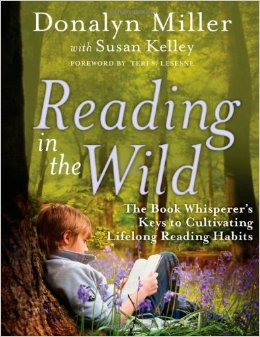
Reading in the Wild: one principal, one teacher, one child at a time

Two months ago, a wonderful primary teacher that I used to work with sent an email to recommend this book to me. I took her advice and downloaded it onto my iPad. I completed it within a few days. This led me to joining goodreads.com, rekindled my love of reading for personal enjoyment again (it seems as if all I have been reading were professional titles), and I bought 8 more copies for my Language Arts teachers. Tongue in cheek, I told them not to come back to work next year until they read it. It was that good.

They quickly finished the book and with only two days of school left, we met for an after school book talk on The Warehouse restaurant patio in beautiful Roscoe Village and we talked about how to make "wild readers" out of our students.
Many ideas were shared which led to a common belief of how we think about teaching students to read and instilling the love of reading at the same time.


Meanwhile, over the summer break, I am sure many of the things Donalyn highlighted in her book will be planned out and implemented with our own special twists when we return in the fall. I will be proudly recognizing the groups effort and informal learning by adding a badge to their classroom badge poster.

A sister elementary school has begun reading the same book and it is satisfying to think of common ideas that can be shared when we all get together.

Use the summer tor refresh, and read. Just read.


Tuesday, May 20, 2014

Badges: Learn and Earn

 Unfortunately, when I was a boy, I never took the opportunity to join the boy scouts and I secretly envied all of the neat badges my friends earned and displayed on their shirts. If I were still in the classroom, I am pretty sure modern day badges would have a place in my classroom. I think they provide just the right amount of intrinsic and extrinsic motivation. Badges in school today are a way to recognize students' and teachers' informal learning.
Badge resource: http://www.emergingedtech.com/2013/06/the-evolving-use-of-badges-in-education/
   
     The Ohio Appalachian Collaborative has begun to digitally recognize educators by providing them a pathway to earning and learning. Educators can earn a "tweet badge" and a "share badge" and earn CEUs along the way. If your school is a member of the OAC, you can find out more here>http://portal.battelleforkids.org/OAC/blog

     I am thinking of hanging a poster size board outside of teachers' classrooms next year and then printing off large sticker "badges" to attach to for recognition as they pursue informal learning opportunities.

     Does your school principal or teachers promote and recognize "learning and earning?" If so, I would love to hear about it in the comment section!